OASA Logo OASA
Community wellbeing and regenerative living at Traditional Dream Factory

Glossary

Key concepts, terms, and principles from OASA's research on regenerative commons, land stewardship, and regenerative economics.

A

Agroforestry
A land management system that integrates trees, crops, and sometimes animals in symbiotic arrangements, mimicking natural forests while producing food, timber, and other products. OASA projects must integrate tree crops or food forests.
Antifragility
A property of systems that actually strengthen under stress or volatility. Commons economies can be antifragile because they have diverse revenue streams and cooperative structures that adapt to shocks.

B

Bonding Curve
An algorithmic pricing mechanism where token prices increase as more tokens are issued, reflecting the project's capacity constraints. Early supporters pay lower prices, while later buyers pay more as the project matures and risk decreases.
Biodiversity
The variety of life in an ecosystem. OASA projects must maintain and enhance biodiversity through rewilding, native species planting, and diverse agricultural systems. At least 50% of land must be wild or rewilded.

C

Catalytic Capital
Early-stage funding for land acquisition and regeneration that is non-speculative. Returns are measured in ecological health, community resilience, and long-term stability rather than financial dividends.
Citizen
A member of an OASA project who holds a threshold quantity of the project's local token, has contributed materially to stewardship, and is vouched for by existing Citizens. Citizens have full governance and use rights.
Commons
Resources or land held collectively and managed for the benefit of a community, rather than owned privately for individual profit. OASA restructures land ownership into perpetual commons held in trust.
Commons Market Maker
A smart contract that implements a bonding curve for token issuance, enabling continuous token sales while preventing overselling beyond the project's physical capacity.
Community Land Trust (CLT)
A nonprofit organization that acquires and holds land in trust to preserve affordability or conservation. OASA's model differs by using token pre-sales for financing while maintaining the trust structure.

D

DAO (Decentralized Autonomous Organization)
A governance structure where decisions are made collectively by token holders through transparent voting mechanisms. OASA projects use DAOs for community governance while maintaining legal entities for land holding.
Digitized Commons
The principle that data, contracts, and governance rules are public goods. OASA commits to open-source development, transparent data sharing, and privacy by design, making information about the commons accessible to all stakeholders.
Digital Twin
A living digital representation of the land created through continuous monitoring via sensors, satellites, drones, and community observations. Provides transparent data on ecological health and regeneration progress.

E

Environmental DNA (eDNA)
Genetic material collected from environmental samples (soil, water) that reveals which species are present in an ecosystem without direct observation. Used by OASA projects for biodiversity monitoring and baseline inventories.
Exit to Commons
The strategy of using incoming token sales to retire debt, gradually eliminating all private claims (loans) so the land and infrastructure are owned free and clear by the nonprofit commons entity. The exit is achieved when debt is cleared, not through asset sale.

G

Guardians of Nature
Trusted individuals or bodies appointed to represent the rights of water, soil, air, flora, and fauna. Guardians can flag or veto decisions that would compromise ecological integrity, ensuring intergenerational justice and ecological principles are upheld.
General Meeting (GM)
The highest deliberative body of OASA, composed of representative delegates from all Projects. The GM approves new projects, amends the constitution and principles, and revokes projects that violate the Principles of Regeneration.

K

Keystone Species
Species that create conditions for many others to thrive (like beavers building wetlands). OASA's philosophy holds that humans can become keystone species through regenerative practices that increase biodiversity and ecosystem function.

L

Land as Commons
The legal restructuring of land ownership from private property to perpetual commons held in trust. No individual holds title or equity; the land is locked in trust for future generations, ensuring it can never be sold or exploited for private gain.

N

Nature-Backed Economy
An economic model where the underlying asset is the health of the land itself. Rather than treating land as a commodity, tokenized access rights enable communities to finance regenerative infrastructure while ensuring land remains in trust. Returns are measured in ecosystem health and social wellbeing.

P

Perpetual Commons
Land or resources held in trust forever, with legal guardrails ensuring they can never be sold, privatized, or exploited for private gain. The asset exists for the commons in perpetuity, with any proceeds from dissolution going to similar regenerative causes.
Principles of Regeneration
Seven core principles that all OASA projects must uphold: Soil, Water, Air, Waste, Rewilding and Biodiversity, Resources, and Community. These set minimum ecological and social standards ensuring every project actively heals and restores ecosystems.
Proof of Presence
A mechanism that tracks how many nights each member actually spends on-site, weighting governance influence so that those who actively contribute and reside have a greater say. Prevents absentee holders from dominating decisions.
Project Assembly
The primary governance body for each OASA project, comprising all Citizens. Responsible for developing masterplans, setting local governance rules, approving budgets, and adjusting token parameters within constitutional limits.

R

REIT (Real Estate Investment Trust)
A vehicle for investors to earn profit from real estate holdings. OASA's model differs by pooling capital without extracting dividends and never reselling land for profit. Success is measured by quality of life and land health, not financial yield.
Regeneration
The practice of actively healing and restoring ecosystems so they can sustain abundance. More than sustainable use, regeneration means increasing biodiversity, soil fertility, water retention, and ecosystem function over time.
Rewilding
Giving land back to natural processes, allowing forests to regrow, rivers to meander, and native species to reclaim their niches. OASA requires at least 50% of project land to be kept as wild or rewilded, where native flora and fauna restore ecosystem integrity.

S

SPV (Special Purpose Vehicle)
A legal entity controlled by the OASA Association to hold land in trust and prevent privatization. Each project's land must be placed into an SPV or equivalent structure, ensuring it remains in the commons forever.
Stewardship
The practice of caring for land and resources with long-term responsibility, moving from ownership to stewardship. Stewards actively maintain and improve the land for future generations rather than extracting value for short-term gain.

T

Tokenized Access Rights
Blockchain tokens that symbolize membership, access, and governance participation rather than ownership. The primary promise is "1 token = 1 night's stay per year, forever." Tokens confer use rights and governance rights but no ownership or profit share.
Traditional Dream Factory (TDF)
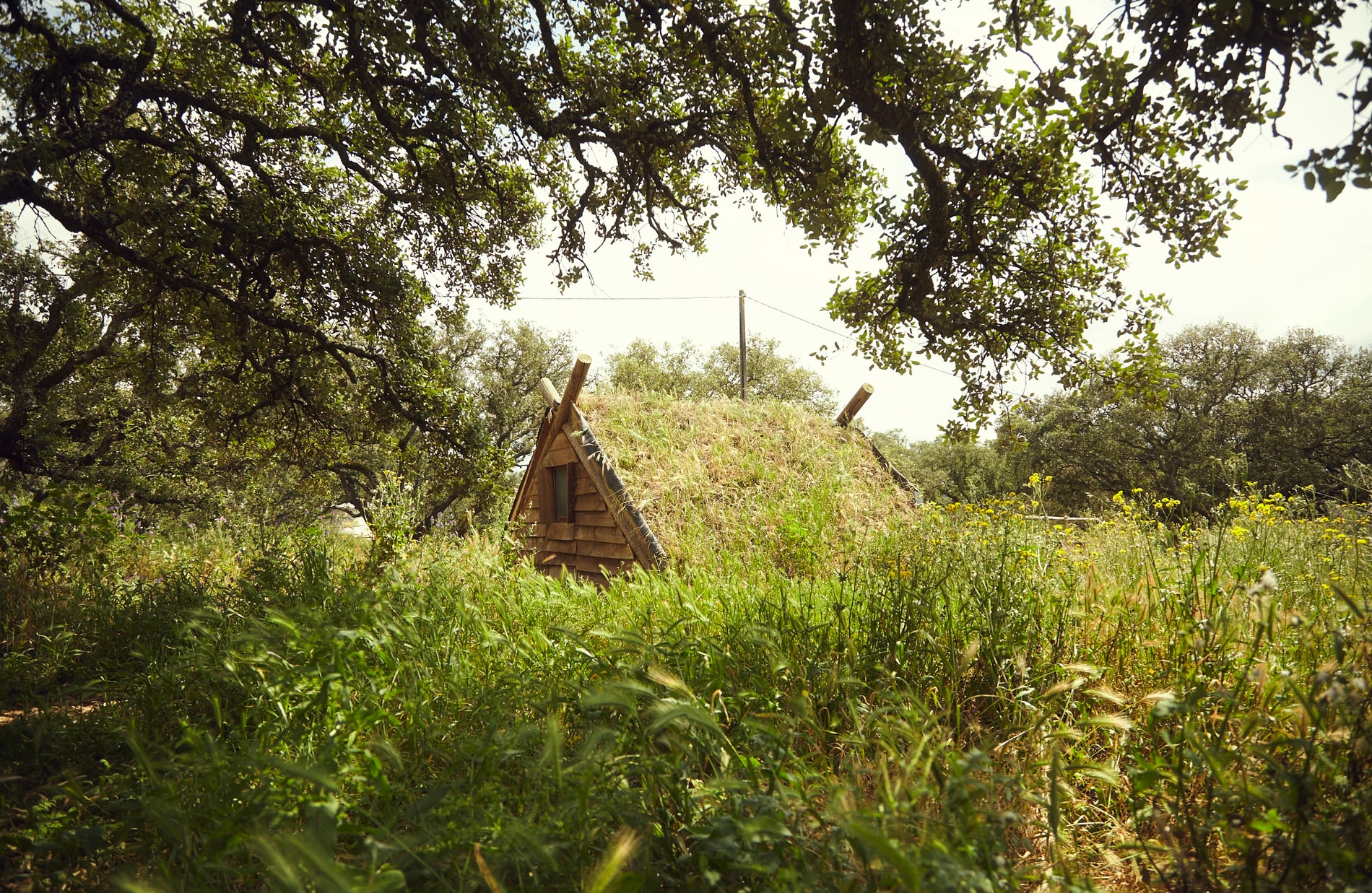
OASA's first regenerative village prototype in Alentejo, Portugal. A 25-hectare site demonstrating the nature-backed, commons-based economy in practice through tokenized access rights, community governance, and regenerative principles.

U

Utility Token
A token that provides usage rights (accommodation nights, harvest shares, votes) and governance participation. Utility tokens are non-equity instruments with no financial return and cannot be redeemed for currency. They are explicitly anti-speculative by design.

W

Water Retention Landscapes
Earthworks and design techniques that slow, spread, and sink water into the ground rather than draining it off quickly. Includes swales, ponds, terraces, and wetlands that capture rainfall, recharge aquifers, and restore the hydrological cycle.

For more detailed explanations, see our research papers.