

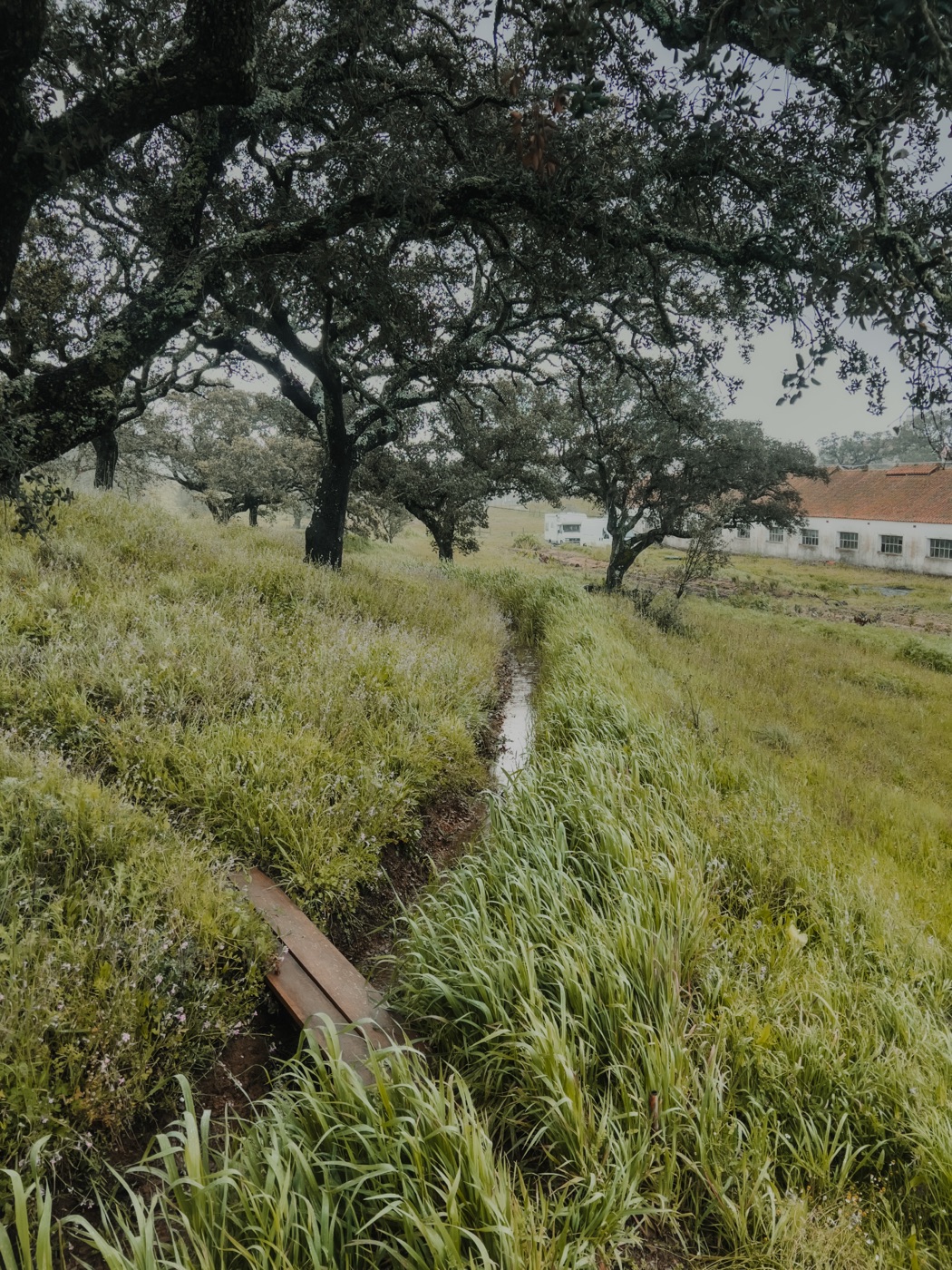
Water Retention Landscapes
Earthworks and design techniques that slow, spread, and sink water into the ground rather than draining it off quickly, regenerating the hydrological cycle and increasing resilience to drought and floods.
What Are Water Retention Landscapes?
Water Retention Landscapes, a concept popularized by permaculturist Sepp Holzer, are holistic design approaches that regenerate the hydrological cycle by capturing, storing, and slowly releasing water in the landscape. Instead of draining water off the land as fast as possible (as conventional infrastructure does), these techniques slow it, spread it, and sink it into the earth.
As described in From Commons to Commodities and Back, water landscape restoration is equally critical to regenerating the hydrological cycle that we disrupted through centuries of extractive land use.
The Core Principle: Slow, Spread, Sink
The fundamental principle of water retention landscapes is simple: instead of allowing rainwater to run off quickly, causing erosion and flooding downstream, we design landscapes to:
- Slow: Reduce the speed at which water moves across the landscape
- Spread: Distribute water across a wider area
- Sink: Allow water to infiltrate into the ground, recharging aquifers
In healthy ecosystems, rainwater is absorbed and released slowly through springs and stream baseflow, keeping rivers perennial and vegetation green through dry seasons. Water retention landscapes aim to recreate these conditions.
Key Techniques
Swales on Contour
Shallow ditches dug along the contour lines of a slope. Swales capture runoff, allowing water to infiltrate into the soil rather than running off. They are typically planted with deep-rooted vegetation that helps stabilize the structure and increase water absorption.
Ponds and Reservoirs
Small to medium-sized water bodies that store rainwater for later use. These can provide water for irrigation, support aquatic ecosystems, create microclimates, and serve as fire breaks. As noted in the OASA Constitution, projects must capture and store rainfall through swales, ponds, terraces, and earthworks.
Terraces
Level platforms built into slopes to reduce erosion and capture water. Terraces slow water flow, allowing more time for infiltration, and can be used for growing crops or trees.
Check Dams
Small dams built in gullies and small streams to slow water flow and capture sediment. They help prevent erosion and allow water to infiltrate into the surrounding landscape.
Wetland Restoration
Restoring natural wetlands that act as sponges, absorbing excess water during rains and slowly releasing it during dry periods. Wetlands also provide critical habitat for biodiversity.
Re-contouring Eroded Slopes
Reshaping degraded landscapes to slow water flow and create opportunities for water infiltration. This often involves earthmoving to create gentle slopes and depressions that capture water.
Deep-Rooted Vegetation and Mulching
Planting deep-rooted trees and plants that help break up compacted soil and create pathways for water infiltration. Mulching bare soil with organic matter helps retain moisture and prevent evaporation.
Benefits of Water Retention Landscapes
Drought Resilience
By storing water in the landscape, these systems provide reserves during dry periods. Groundwater recharge ensures springs and wells continue to flow even during extended droughts.
Flood Mitigation
By slowing and capturing runoff, water retention landscapes reduce the volume and speed of water reaching downstream areas, preventing flash floods and reducing erosion.
Ecosystem Restoration
Increased water availability supports vegetation growth, which in turn creates habitat, sequesters carbon, and improves soil health. This creates positive feedback loops that enhance ecosystem function.
Agricultural Productivity
More water in the landscape means better growing conditions for crops and trees. This is especially important in arid and semi-arid regions where water is the primary limiting factor.
Microclimate Creation
Water bodies and increased vegetation create cooler, more humid microclimates that can extend growing seasons and support more diverse plant communities.
Water Retention Landscapes in OASA Projects
OASA projects are required to implement water retention strategies as part of their regenerative principles. The Constitution specifies that projects must "capture and store rainfall through swales, ponds, terraces, and earthworks; design landscapes to slow, spread, and sink water."
At Traditional Dream Factory, water retention strategies are integrated with other regenerative practices. As noted in the manifesto, a sensor might tell us the soil is dry, but planting a swale and mulching will actually fix it—demonstrating the integration of technology with nature-based solutions.
Implementation Considerations
Successful water retention landscapes require careful observation of the site's topography, soil conditions, rainfall patterns, and existing water flows. Design must consider:
- Local climate and rainfall patterns
- Soil type and infiltration capacity
- Topography and slope
- Existing vegetation and ecosystems
- Legal and regulatory considerations
- Community needs and uses
In OASA's model, where land is held in perpetual commons, water retention landscapes can be designed with truly long-term horizons—investments that will benefit the land and community for generations.
Monitoring and Maintenance
Water retention landscapes require ongoing monitoring and maintenance. Soil moisture sensors can track how well water retention strategies are working, while regular maintenance ensures structures remain functional. Over time, as vegetation establishes and soil improves, the landscape becomes increasingly self-maintaining.
Future Potential
Water retention landscapes represent a fundamental shift from fighting against water (draining it away) to working with water (capturing and using it). As climate change brings more extreme weather—both droughts and floods—these techniques become increasingly important for building resilience. They demonstrate how regenerative practices can address multiple challenges simultaneously: water security, flood control, ecosystem restoration, and agricultural productivity.
Related Terms
- Agroforestry - Integration with water retention systems
- Water Retention Landscapes Permaculture - Permaculture approach to water retention
- Regenerative Principles: Soil, Water, Air - Water as core regenerative principle
- Regenerative Principles - Core principles including water
- Climate Resilient Community - Water retention for climate resilience