

Catalytic Capital
Funded in ways that protect the land for future generations.
OASA deploys catalytic capital as co-financing across regenerative projects. Each euro seeds a stewardship flywheel that completes prototypes, replicates the model, and secures new sites for the commons — then recycles to do it again.
The Stewardship Flywheel
Catalytic capital isn't spent — it's recycled. Each deployment seeds a regenerative commons, gets repaid through community contributions and public co-investment, and redeploys to acquire the next site. One infusion creates a cascade.
Catalytic Capital
Patient capital enters OASA as a donation, interest-free loan, or repayable grant.
Co-Finance Projects
Capital deploys as co-financing into TDF prototype, Closer tech, and new land acquisitions.
Community Co-Invests
Public campaigns like TDF's investment round let the community co-invest, generating repayment flows.
Recycle & Cascade
Catalytic capital is repaid to OASA and redeployed to acquire and seed the next regenerative site.
"Catalytic capital unlocks the prototype, gets repaid, redeploys, and cascades into a network of regenerative commons."
The Ecosystem
Each OASA project is an integrated ecosystem. Revenue from hospitality operations funds the commons; resident contributions build shared infrastructure; catalytic capital seeds it all.
Operations and revenue engine. Eco-tourism, retreats, and co-working generate cash flow that services debt and funds the commons.
~€1.2M to complete (mid 2027)
23 homes for residents across two neighbourhoods. Earthpods and townhouses built with natural, local materials at target ~€2,000/m².
~€5M construction budget
Land, water systems, roads, orchards, farmhouse, and education centre. Every resident contributes; the infrastructure belongs to everyone.
~€1.5M infrastructure budget
Swiss non-profit association. Stewardship vehicle & catalytic capital flywheel. Holds land in perpetual trust. Replicates the model.
Seeking catalytic capital
Same truth, different depth: Whether you're a resident, a visitor, or a funder, the underlying model is the same. What changes is the level of detail. This page is the funder layer — the full data room is linked below.
The Numbers
Three funding needs, two near-term milestones. Simple enough to fit on a napkin — robust enough to underwrite.
€1.2M
Co-Living Construction
Complete hospitality build — mid 2027 critical path
€5M
Co-Housing Build
23 homes + ~€1.5M regenerative infrastructure
€2M
OASA Catalytic Capital
Seeds the flywheel — repaid & redeployed
April 2026
€500k Deposits
Secure land acquisition and fund early infrastructure works for co-housing.
Mid 2027
Co-Living Operational
Hospitality business generating revenue — the proof of concept that unlocks the rest.
Funding Architecture
A three-tier hierarchy that prioritises non-extractive, mission-aligned capital. Multiple funding sources create resilience — no single dependency.
€2M
Into OASA as seed that can be repaid and redeployed
Target audience: Family offices, foundations, web3 philanthropic orgs, mission-aligned capital
Up to 50%
Of construction costs via EU & Portuguese programmes
How you can help: nomination letters, local partner introductions, proof-point documentation
Asset-Backed
Conservative operational projections support bankable case
How you can help: banker or private lender introductions, sanity-check assumptions, validate collateral logic
The Economic Model
Each OASA village is a productive landscape generating multiple revenue streams. The token model connects access rights, commons protection, and a real economy rooted in the land.
Each OASA village generates diversified revenue streams that validate the economic model and fund the commons.
Hospitality & Co-Living
Eco-tourism, retreats, co-working — the primary revenue engine
Agricultural Products
Olive oil, almond butter, gourmet mushrooms, medicinal tinctures (reishi, lion's mane), seasonal vegetables, biochar
Farm-to-Table Restaurant
On-site dining featuring produce from the land — a direct farm-to-fork experience
Digital Services & Education
Closer platform licensing, TDF Learning Hub subscriptions & educational content
Energy & Intelligence
Solar microgrid for Abela (panels at cost via Kinterra partnership), sovereign AI services for regenerative communities
An access right + commons protection mechanism. 1 $TDF token = 1 night's stay per year, forever. Tokens offset accommodation costs, creating an affordable path into the community.
280+ token holders • 20,709 tokens remaining for sale (incl. co-housing)
Tracks contribution — hours spent on maintenance, agriculture, or community management. Amplifies governance influence and reduces living costs. Your labour is valued alongside your capital.
Recognises non-financial contributions • Ensures diverse, equitable governance
Token price increases in steps. Pioneers who join early benefit from lower entry costs and additional incentives. Early catalytic capital enables these advantages by de-risking the project for future participants.
The Living Proof
Traditional Dream Factory in Portugal's Alentejo demonstrates the model at work. Seven years of building, iterating, and proving that commons-based regeneration is financially viable.
25 ha
Regenerative Land
280+
Token Holders
34%
Projected EBITDA Margin
2.7x
Debt Service Coverage
€8.5M+
Projected Assets (2028)
1.2M L
Rainwater Harvested
50%
Protected Wild Core
60+
Active Citizens

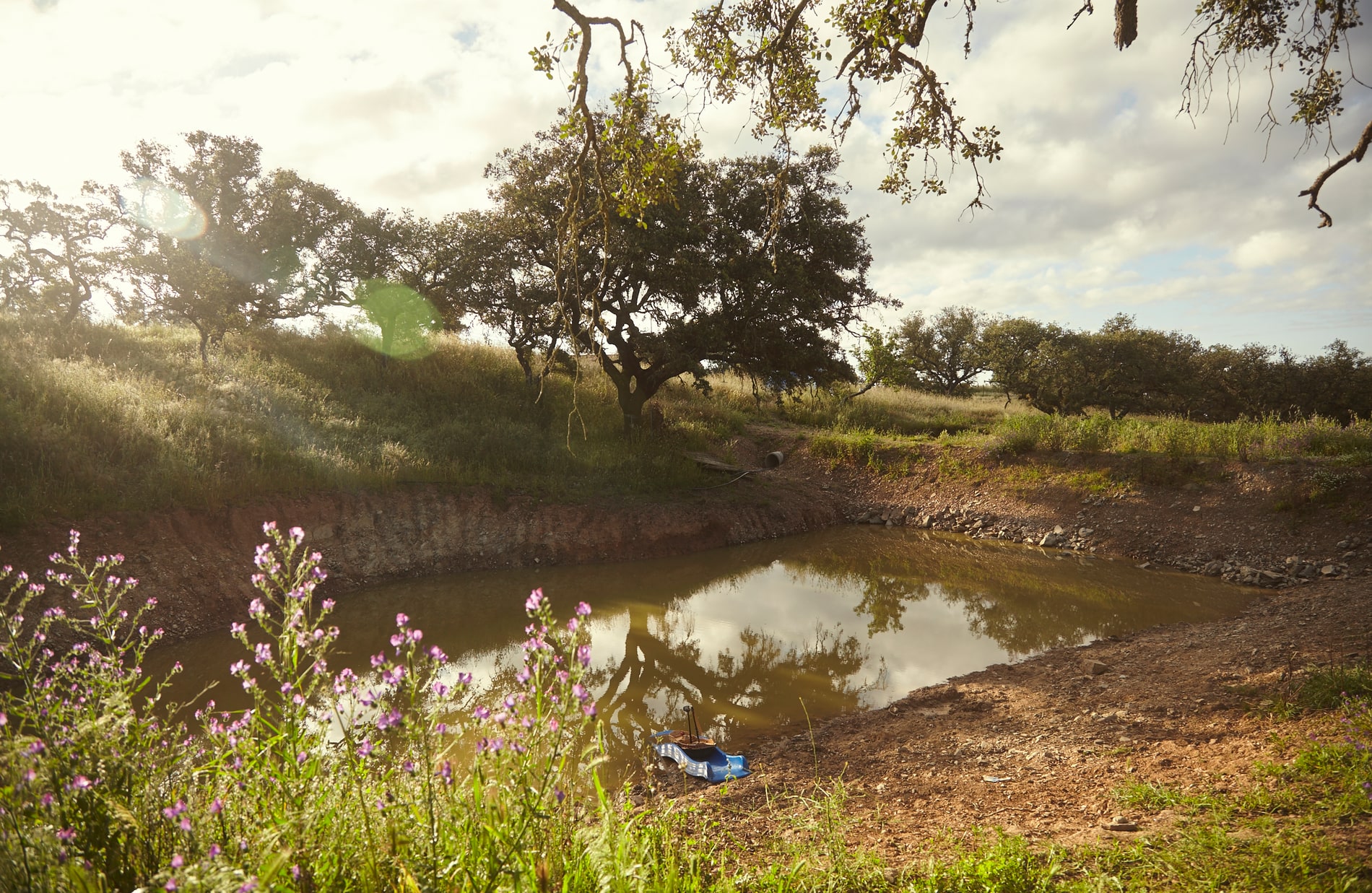
Cork Oak Savanna

Regenerative Building

Community Agriculture
Conservative projections based on the completed hospitality build and operational track record.
| Metric | Base Case | Worst Case |
|---|---|---|
| Total Revenue | €589,857 | ~€485,000 |
| EBITDA | €202,539 | €158,057 |
| EBITDA Margin | 34.3% | ~32% |
| Debt Service Coverage Ratio | 2.74x | ~2.1x |
| Annual Debt Service | ~€74,000 | ~€74,000 |
| Total Projected Assets | €8.5M+ | — |
Worst case: -10% occupancy, -15% average daily rate. DSCR remains >2.0x in all scenarios tested.
Capital Deployment
Catalytic capital co-finances three parallel workstreams. Each euro is deployed to maximise leverage — attracting public grants and community co-investment at every stage.
Finish the co-living hospitality build in Portugal's Alentejo — the critical path that proves the economic model and generates the revenue to support the co-housing village.
Develop and scale the Closer tech platform — the operational backbone that any community can use to manage bookings, tokens, governance, and contributions.
Identify, acquire, and begin the regeneration process on new land parcels — expanding the OASA network of perpetual commons across bioregions. The long-term goal: 100,000 hectares under regenerative stewardship by 2050, secured with real, diversified local economies.
Digital Strategy
Closer is OASA's technology product: a protocol that gives land-based communities a full operating system — bookings, events, subscriptions, volunteering, governance, token economies, and financial tools in one integrated stack.
Currently running at 6 communities. TDF has processed 3,000+ guests and raised €1.25M+ through 280+ token holders using the platform. 100+ features built and battle-tested over 5 years.
Four pillars drive the next phase: One-Click Deployment (any community live in minutes), Full Configurability (custom pages, branding, feature toggles), Integrated Passport (a federated identity that travels across all villages in the network), and Agentic AI (institutional memory and operational assistance for small teams).
Closer earns a 5% protocol fee on all bookings, plus village subscriptions and referral fees across the network. The Passport system turns individual villages into an interconnected network — guests, reputation, and economic activity flow between communities, creating a moat that standalone tools can't match.
The Long-Term Vision
OASA's mission is to secure 100,000 hectares of land under regenerative stewardship — removed permanently from the speculative market and held in trust for future generations. Each site is anchored by a real, diversified regenerative economy: hospitality, agriculture, education, energy, and digital services working together to make the commons financially self-sustaining.
25 ha
Secured today (TDF)
1,000 ha
Target by 2030
100K ha
Vision for 2050
Every hectare is backed by a living community, a working economy, and a governance structure designed to last centuries. The catalytic capital you deploy today is the seed that makes this cascade possible.
Regenerative Infrastructure
~30% of every resident contribution flows into shared infrastructure that belongs to everyone and endures for generations.
The figures below are from TDF (Traditional Dream Factory) — OASA's flagship prototype in Portugal's Alentejo. Each future OASA site will develop its own infrastructure plan using TDF as a template.
| Infrastructure | Projected Cost | Purpose |
|---|---|---|
| Land Acquisition (25 ha) | €550,000 | Expansion land for co-housing & commons |
| Water & Road Systems | €125,000 | Shared utility infrastructure |
| Orchard Development | €150,000 | Food security & revenue generation |
| Farmhouse & Education Centre | €500,000 | Community social & technical hub |
| Total Commons Need | €1,325,000 | Surplus ~€220k from resident contributions |
Risk & Resilience
Multiple funding sources create resilience. No single dependency. Conservative projections with significant downside protection.
Three independent funding tiers ensure no single point of failure. If one source underperforms, others compensate. Catalytic capital, grants, and bank debt each serve different phases of the project.
All capital is deployed into physical land, buildings, and operational infrastructure. Projected asset base of €8.5M+ by 2028 provides strong collateral backing for all obligations.
TDF generated ~€50k revenue in 2025 before the hospitality build was complete. The commercial model is validated — the build simply scales it.
Residents can transfer their tokens and access rights. The commons structure ensures these transitions are smooth and that the community endures beyond any individual's participation.
OASA as a Swiss non-profit association provides robust legal protection. Land cannot be sold or encumbered for private profit. The OASA Constitution mandates ecological stewardship standards.
Structured repayment from community co-investment campaigns and operational cash flow. The flywheel model means your capital isn't consumed — it returns to fund the next commons.
As Seen In


Take Action
Whether you can provide capital, open doors, or lend expertise — there's a way to catalyse this transition.
Connect us with family offices, foundations, web3 philanthropic organisations, or mission-aligned funds. A warm introduction is the most powerful currency.
Write nomination letters, introduce local partners, or help document proof points for Horizon Europe and other grant applications.
Introduce bankers, sanity-check financing assumptions, or help validate our commons-based legal structure with Portuguese lenders.
"This is not charity. This is investing in a new financial infrastructure that removes land from the speculative market and creates a cascade of regenerative commons — permanently."
The OASA Stewardship Flywheel